Borrowing against life insurance is one of the most misunderstood moves in personal finance. Done right, it is how a permanent policy can hand you income that is not treated as taxable. Done wrong, it can trigger a tax bill and even collapse the policy. Here is how it actually works in Louisiana.
Short answer: yes. If you own a permanent life insurance policy with accumulated cash value, you can borrow against that cash value in Louisiana. The money you are borrowing against is also protected from your creditors while it sits inside the policy, under Louisiana R.S. 22:912. A properly structured loan is not treated as taxable income. The two things that cause the bad outcomes are a policy that fails a federal tax test and a policy that is allowed to lapse with a loan still on it.
This is general education, not individualized tax or legal advice. The rules below turn on how your specific policy is structured and funded, so confirm with a licensed tax or insurance professional, and with a licensed Louisiana attorney on the creditor-protection points, before you rely on any of it.
What you are actually borrowing against
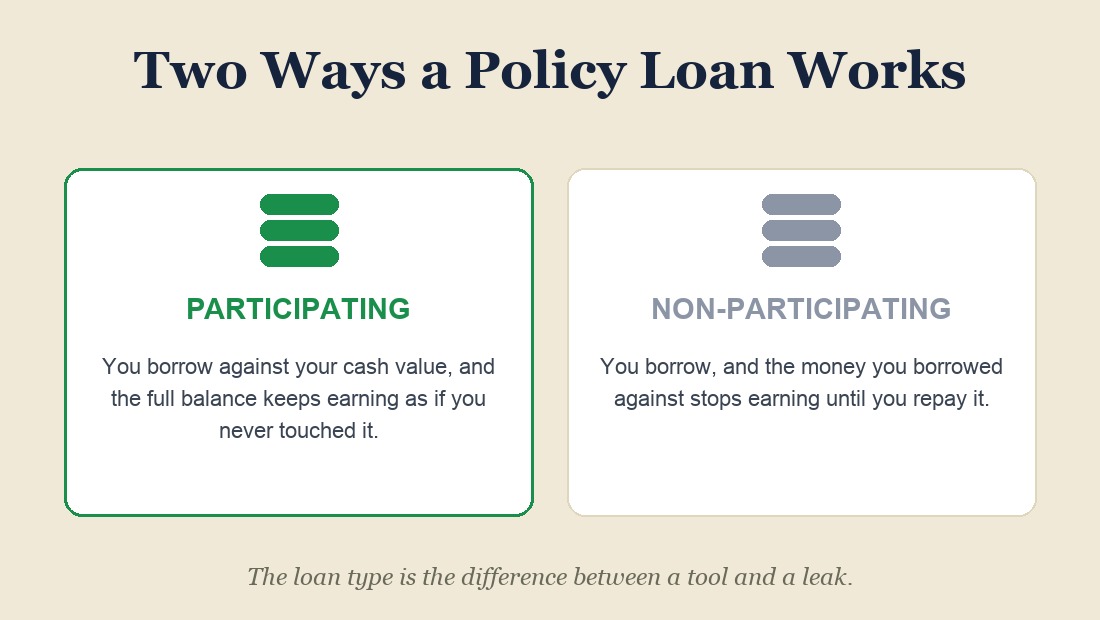
Only permanent life insurance builds cash value you can borrow against. Term insurance does not. With a permanent policy, part of every premium goes into a cash value that grows over time, the accumulation vehicle Retirement Shield calls the VAULT System. Once there is enough value built up, you can take a loan from the insurer using the policy as collateral. You are not draining the account. The cash value stays in the policy and continues to earn, and you receive loan proceeds against it. You can generally use the money for anything, and because the policy secures the loan, there is typically no credit check and no fixed repayment schedule the way a bank loan would have. That flexibility is the whole appeal, and it is also where people get careless.
In Louisiana, that cash value is creditor-protected
Here is the state-specific part most people never hear. Under Louisiana R.S. 22:912, the living cash surrender and loan value of a life insurance policy falls within the protection the statute gives to the policy’s proceeds and avails. In plain terms, the cash value you are borrowing against is generally shielded from your creditors while it stays inside the policy. For a Louisiana resident with any liability exposure, that is a real reason to hold savings inside a properly structured policy rather than in a plain taxable account that a judgment can reach. One timing detail to know: the statute caps protection at $35,000 of living surrender or loan value if the policy was issued within nine months of a creditor’s writ or a bankruptcy filing. Once a policy has been in place longer than that window, the protection is uncapped. We cover the protection and all of its limits in our full guide to Louisiana life insurance creditor protection.
The one creditor-protection catch: pledging the policy
Built into the same statute is a carve-out you need to understand before you borrow. A normal policy loan taken from your insurer is one thing. But if you pledge or assign the policy as collateral to an outside lender, for example to secure a bank loan or a business debt, the rights you pledged are carved out of the R.S. 22:912 protection to the extent of that pledge. The portion you signed over is no longer shielded from that creditor. So the act of using your policy to back an outside debt can quietly undo part of the very protection that made holding cash value in the policy attractive. If you are only taking a standard loan from the insurer and not assigning the policy to a third party, you are not triggering this carve-out, but it is worth confirming the structure of any arrangement with a licensed Louisiana attorney before you sign.
Want to know whether a policy you could borrow from tax-free actually fits your situation? Retirement Shield walks Louisiana savers through a short questionnaire and connects you with one licensed professional who can model the loan strategy on your own numbers, honestly, then points you to your own attorney to confirm the structure. See if you qualify →
Why a policy loan is not taxed, and when it is
The reason a policy loan can fund income that is not treated as taxable comes down to how the federal tax code sees it. A loan is not income. When you borrow from a properly structured policy that is not a modified endowment contract, the loan proceeds are not treated as taxable income under the federal rules (Internal Revenue Code section 72(e)). That is the engine behind using permanent life insurance for tax-advantaged income: you are receiving borrowed money against your own cash value, not making a taxable withdrawal of gain.
That treatment is not automatic, though. It depends on the policy staying on the right side of two federal lines, and those two lines are exactly where people get burned.
The two traps that create a tax bill
Trap one: the policy is a modified endowment contract. A modified endowment contract, or MEC, is a policy that was funded too fast and failed a federal seven-pay test under Internal Revenue Code section 7702A. Once a policy is a MEC, the tax treatment of loans flips. Loans and pledges from a MEC are treated as taxable distributions on an income-first basis, meaning the gain comes out and gets taxed before your basis does, and there can be an additional 10 percent penalty on taxable amounts taken before age 59 and a half, with limited exceptions. A policy built for the loan strategy is designed specifically to stay under the seven-pay limit and avoid MEC status, which is one of the main reasons funding level and structure matter so much.
Trap two: the policy lapses or is surrendered with a loan outstanding. If a policy lapses or you surrender it while a loan is still on it, the outstanding loan can be treated as an amount you received, and any gain above what you paid into the policy can become taxable ordinary income. A policy that collapses with a large loan against it can hand the owner a tax bill at the worst possible moment. This is the quiet failure mode behind most policy-loan horror stories: the loan itself was fine, but the policy was not kept in force to support it. Confirm the specific tax treatment of any loan plan with a licensed tax or insurance professional, because it depends on your policy’s numbers.
How to keep the strategy working
The fix for both traps is management, not luck. Keep in mind that policy loans and withdrawals reduce your available cash value and your death benefit, and an over-borrowed policy that runs out of value can lapse. So fund the policy so it never becomes a MEC, do not over-borrow against it, and keep enough cash value and premium going in that the policy stays in force for life. Review it every year, and watch the loan balance against the cash value the way you would watch a line of credit. The people who get burned by policy loans are almost always the ones who treated the policy as a piggy bank, drained it, and let it collapse. The people it works for treat the loan as a long-term income tool inside a policy they intend to keep. For the mechanics of how the loan actually produces income that is not treated as taxable, see our national explainer on how policy loans create tax-advantaged income, and for the bigger picture in this state, the honest guide to the VAULT System in Louisiana.
Want a straight answer for your own numbers? Take the two-minute Retirement Shield questionnaire. You will see whether a properly structured permanent policy fits your income and your goals, and get connected with one licensed professional, no pressure and no obligation. Start the questionnaire →
Frequently asked questions
Can you borrow against life insurance in Louisiana?
Yes, if you own a permanent life insurance policy with accumulated cash value. Term insurance has no cash value to borrow against. The loan uses the policy as collateral, so it generally requires no credit check and no fixed repayment schedule. The cash value stays in the policy and continues to earn while you borrow against it.
Is a life insurance policy loan taxable?
Generally no, if the policy is not a modified endowment contract and stays in force. Under Internal Revenue Code section 72(e), loan proceeds from a non-MEC policy are not treated as taxable income. The exceptions are loans from a MEC, which are taxed on the gain first with a possible 10 percent penalty before age 59 and a half, and a lapse or surrender with an outstanding loan, which can create taxable gain above your basis.
What is a MEC, and why does it matter for loans?
A modified endowment contract is a policy that was funded too fast and failed the federal seven-pay test under Internal Revenue Code section 7702A. Once a policy is a MEC, loans and pledges are treated as taxable distributions on an income-first basis, with a possible early-distribution penalty. A policy designed for the loan strategy is built to stay under the limit and avoid becoming a MEC.
Is my policy’s cash value protected from creditors in Louisiana?
Yes. Louisiana R.S. 22:912 protects the living cash surrender and loan value of a life insurance policy from the owner’s creditors, subject to the statute’s limits, including a $35,000 cap when the policy was issued within nine months of a writ or bankruptcy and a carve-out for rights you pledge or assign. Confirm how it applies to you with a licensed Louisiana attorney.
What happens if my policy lapses while I have a loan?
A lapse or surrender with an outstanding loan can be treated as a taxable event, and any gain above your basis can become ordinary income. Because policy loans reduce your available cash value and death benefit, an over-borrowed policy can lapse. Keeping the policy funded and in force is how you avoid that outcome.
Is this tax or legal advice?
No. This article is educational. The tax treatment of a policy loan depends on how your specific policy is structured and funded, and creditor protection turns on the facts of your situation. Confirm with a licensed tax or insurance professional, and with a licensed Louisiana attorney on the protection points, before acting.
This article is general education, not individualized tax, legal, or investment advice, and not a recommendation to buy any product. Policy loans and withdrawals reduce available cash value and the death benefit and can cause a policy to lapse if not managed properly, and a lapse or surrender with an outstanding loan can create a taxable event. Tax treatment depends on whether the policy is a modified endowment contract under Internal Revenue Code sections 7702A and 72(e) and on federal rules that can change. Creditor protection under Louisiana Revised Statutes section 22:912 depends on the facts and applicable exceptions, including the nine-month issuance rule and the carve-out for pledged or assigned rights, and is not absolute. Consult a licensed Louisiana attorney and a licensed tax or insurance professional about your specific situation before making decisions. Insurance products are offered through appropriately licensed professionals in your state. Retirement Shield is a marketing and education brand, not a law firm, accounting firm, or insurance carrier. Linh Tuong Nguyen is licensed in Louisiana (License #1276760).